Infinity Mirror
Specifications: Custom (Price per square meter)
Materials: Metal Support Frame / LED Optical Components / Acrylic
Price: // ***
Product Description
Core Design Origin: Artistic Transformation of Optical Physics
This is the foundational design logic of the Infinity Mirror and what fundamentally distinguishes it from traditional decorative art, light strips, and ordinary mirrors.
Utilizing Optical Illusion to Break Spatial Boundaries
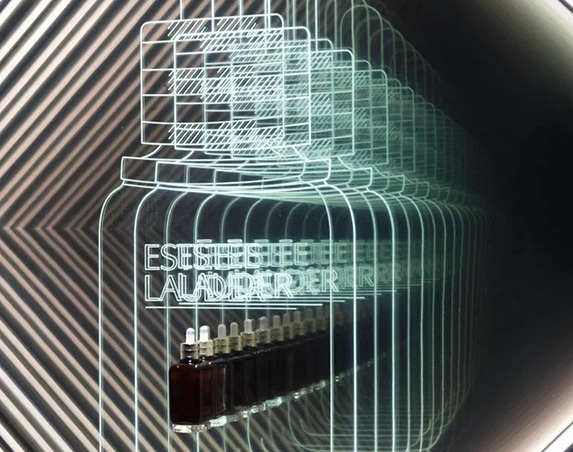
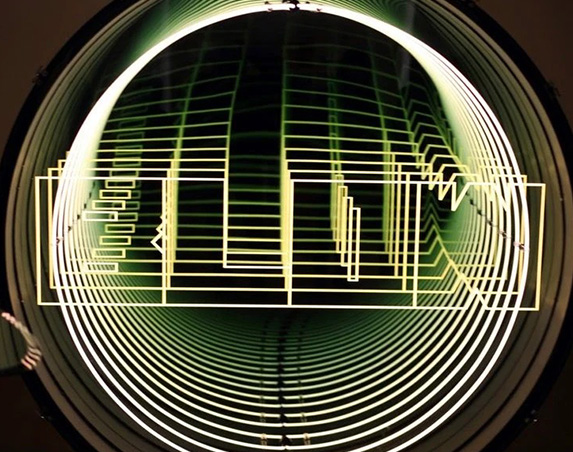
The core design principle leverages a parallel optical structure combining a half-transparent, half-reflective mirror and a fully reflective mirror. This allows light sources to undergo infinite recursive reflections between the two mirrored surfaces. As the human eye cannot discern microscopic reflection attenuation, a limited physical thickness (typically only 5-10 cm) is perceived as an infinitely extending, deep tunnel. The effect achieves an endless visual depth within a finite physical space.
Technical Principles Serving Visual Expression
The design is not merely a stacking of materials but involves precise control of optical parameters such as mirror light transmittance, reflectance, parallelism, and interlayer spacing. It transforms abstract optical principles into an artistic visual illusion, where technology serves as the foundation for aesthetics, not the goal itself.
Aesthetic Design Philosophy: Symbiosis of Reality and Illusion, Reshaping Spatial Vision
- The aesthetic design of the Infinity Mirror abandons the traditional decorative approach of "physical form as primary, light and shadow as secondary." Instead, it places light and shadow at the core and reality-illusion interplay as the foundation, constructing a novel spatial visual experience.
- Spatial Deconstruction with Infinite Depth
- Traditional decor is mostly two-dimensional, serving only as surface ornamentation. The Infinity Mirror creates three-dimensional depth through reflection, capable of deconstructing and reshaping the perceived scale of existing spaces: small spaces can feel less oppressive through visual extension, while large spaces can fill voids and add layers with its profound effect, transforming flat walls into immersive visual spaces with a sense of breathability.
- Illusory Atmosphere Combining Reality and Illusion
- The design follows the aesthetic logic of "symbiosis of reality and illusion": the physically existing frame, light source, and panel are the real; the infinitely extending, gradually fading reflected light is the illusory. The "real" components establish the physical form of the installation, while the "illusory" components create an atmosphere of mystery, dreaminess, or technology, moving beyond literal and monotonous decorative expression to endow the space with a hazy yet emotionally potent value.
- Minimalist Framework with Multi-Style Compatibility
- Its basic structure (panel + light source + frame) is extremely minimalist, devoid of complex, redundant forms. This minimal framework possesses strong style adaptability. By adjusting light source colors, dynamic effects, panel patterns, and frame materials, it can seamlessly fit styles such as Cyberpunk, Futuristic Tech, Minimalist Luxury, Neo-Chinese Chic, Niche Art, or Cozy Warmth, achieving design flexibility where the "basic structure remains unchanged, but visual styles are infinitely variable."
- Light-Dominated Design, Diminishing Material Presence
- The design core is to highlight the flow, color, rhythm, and transformations of light, rather than the texture of physical materials like the frame or panel. By controlling light effects such as brightness, gradients, and flickering, light becomes the visual focal point of the space, diminishing the perceived presence of the hardware and creating a light and dreamy visual effect.

Functional Design Philosophy: Balancing Artistic Expression and Practical Value
- The Infinity Mirror is not a purely conceptual art installation but a practical decorative piece implemented in commercial and residential settings. Its design consistently balances artistic effect with functional use.
- Atmosphere First, Precisely Matching Scene Vibe
- The core functional value is spatial atmosphere creation, not basic illumination . Light effects are customized based on scenario needs: commercial spaces emphasize high-impact, high-recognition dynamic lighting to create a trendy, tech-driven vibe; home spaces focus on soft, low-saturation static lighting for a healing and tranquil atmosphere; art settings use abstract lighting to convey conceptual moods like philosophy or temporality.
- Lightweight Spatial Transformation, Low-Cost Enhancement
- Aligning with the modern design trend of "light hard decoration, emphasis on soft decoration", the Infinity Mirror adopts modular designs for wall-mounting, freestanding, or recessed installation. It allows for quick transformation of areas like walls, entryways, door headers, or feature walls without major demolition, using lightweight decorative installations to replace complexhardscape forms, achieving cost-effective and efficient spatial upgrades.
- Safe and Eco-friendly, Suitable for Long-Term Use
- The design integrates safety and sustainability: it prioritizes low-voltage 12V/24V LED light sources for energy efficiency, low heat, and long lifespan; frame and panel materials are chosen for flame retardancy, eco-friendliness, and aging resistance; modular structures facilitate later maintenance and light source replacement, complying with commercial fire regulations and residential safety standards.
- Traffic Attraction and Brand Empowerment in Commercial Scenarios
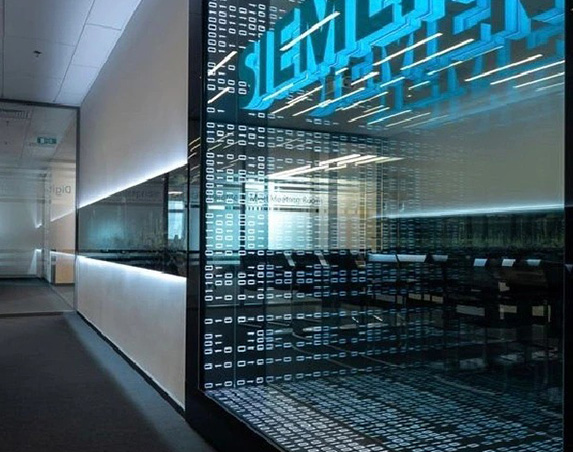
- For commercial spaces, the design can incorporate brand communication attributes. Brand LOGOs, IP imagery, slogans, or exclusive patterns are integrated into the mirror interlayer, leveraging the infinite reflection's visual focus to strengthen brand recall. Simultaneously, its social media-friendly visual appeal can create dedicated photo spots, achieving multiple values: decoration, traffic attraction, and brand promotion.
Contextual Design Philosophy: Scenario-Specific Design Direction
- Design priorities and core concepts differ significantly across usage scenarios, ensuring high adaptability between design and context.
- Commercial Public Spaces (Malls, Bars, KTVs, E-sports Arenas, Trendy Stores)
- Core Design Concept: Eye-catching traffic attraction , differentiated competition , buzz creation.
Design emphasizes high visual impact, using RGB dynamic lighting, neon strips, and high-saturation colors to highlight cool , trendy , tech styles. Forms lean towards large sizes and customized patterns, creating the space's core visual photo spot, utilizing the Infinity Mirror's social media appeal to increase foot traffic and social sharing.
Residential Spaces (Entryways, Living Rooms, Bedrooms, Gaming Rooms, Feature Walls) - Core Design Concept: Atmosphere creation, spatial expansion , personalized expression.
- Design tends to be understated, gentle, toning down exaggerated dynamic effects. It uses low-saturation single-color temperatures and simple patterns to enhance spatial quality and coziness. Forms are compact and minimalist, suited to the comfortable nature of homes, meeting young people's desires for individuality and niche aesthetics while leveraging visual depth to alleviate the压抑感 (sense of confinement) in small spaces.
- Art Exhibitions and Installation Art
- Core Design Concept: Concept expression, philosophical exploration , artistic experimentation.
- It transcends pure decorative purpose, treating the Infinity Mirror as a medium for artistic expression. The infinite reflection effect is used to interpret abstract philosophical concepts like time-space , reincarnation, nothingness , future, self-perception. Through unconventional shapes, special lighting, and interactive design, the installation becomes a vehicle for conveying artistic ideas, achieving a dimensional elevation from commercial decor to artwork.
Core Guidelines for Design Implementation
- The realization of all design concepts must adhere to the following principles to ensure the unity of effect and practicality:
- Optical Priority Principle: All design aspects—form, size, material—must first guarantee the parallelism of the two mirrored surfaces and the ratio of transmission to reflection to ensure the infinite reflection effect is pure and distortion-free. Aesthetic design always serves the core optical effect.
- Context Adaptability Principle: Reject template-based designs. Customize according to space style, target users, and functional needs. Avoid blind pursuit of exaggerated effects; strive for beauty that fits.
- Minimalist Redundancy Principle: Simplify unnecessary structures and forms to avoid interference with the optical reflection effect and to reduce production, installation, and maintenance costs.