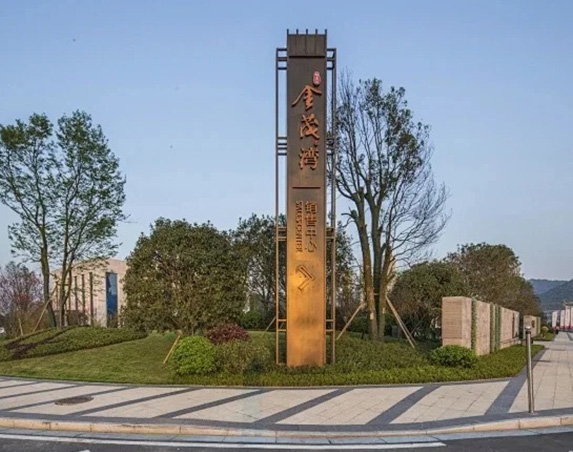
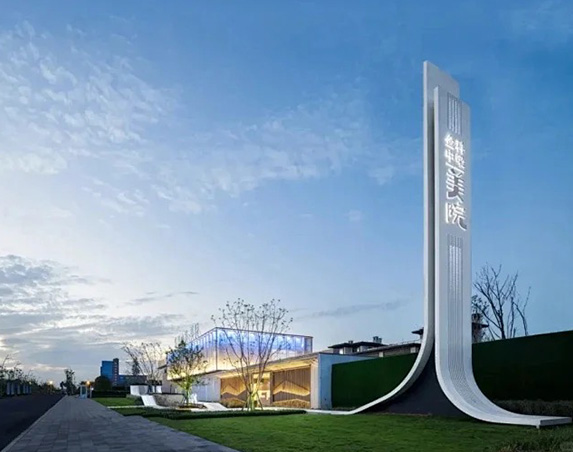
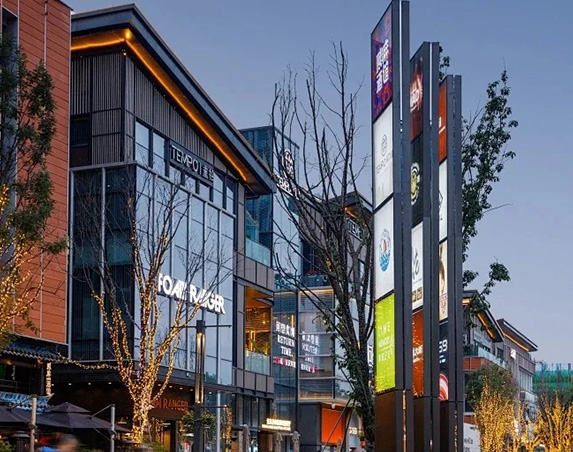
Pylon Sign
Specifications: H = 10000mm / H = 12000mm
Materials: 304 Stainless Steel / 201 Stainless Steel / Galvanized Steel Sheet
Price: // ***
Core Definition and Essential Attributes
A Totem/Monolith (often referred to as a "Landmark Structure" or "Brand Monument") is a prominent artistic installation erected in public spaces such as commercial complexes, theme parks, transportation hubs, or scenic areas. It serves as a concentrated medium to convey the culture, spirit, and identity of an enterprise, project, or region. Its core characteristics include:
Scale Requirement: Typically exceeds 10 meters in height (distinguishing it from standard wayfinding signage), creating long-distance visual impact through its imposing form.
Functional Positioning: It is not merely a directional guide but emphasizes the transmission of cultural symbols and the shaping of brand image, acting as the "spiritual landmark" of an enterprise or project.
Artistic Nature: Through unique forms, material contrasts, or the integration of cultural elements, it becomes a visual focal point and art installation within its environment.
Main Functions and Value
- The value of a Totem lies in the unification of "spiritual conveyance" and "functional bearing," specifically including:
- Brand Image Reinforcement: As the "primary visual symbol" for enterprises, real estate projects, or scenic areas, it centrally displays their core culture, spirit, or positioning (e.g., a developer's concept of "quality living," a scenic area's "historical and cultural" essence), enhancing brand recognition and memorability.
- Cultural Symbol Transmission: It integrates regional culture, corporate philosophy, or scenic area features (e.g., historical allusions, folk patterns), becoming a tangible vehicle for cultural heritage (e.g., a totem with Qin Dynasty elements at the Xi'an Terracotta Army site, or a fairy-tale castle structure at Disneyland).
- Wayfinding and Landmark Function: Owing to its large scale, it provides long-distance guidance in complex environments (e.g., indicating the "main entrance" of a commercial complex, locating the "Visitor Center" in a scenic area). Simultaneously, it becomes a "landmark structure" for the area, attracting foot traffic and enhancing the site's visibility.
- Value Enhancement: As the "face" of a project, a Totem can significantly elevate the overall perceived value of an enterprise, real estate development, or scenic area (e.g., a totem in a high-end real estate project reinforces its "premium positioning," while a scenic area totem can become a "social media hotspot").

Design Principles and Key Elements
- The design of a Totem must balance artistry, functionality, and environmental harmony. Core principles include:
- Safety: As a large-scale structure, it must comply with architectural and mechanical standards, ensuring wind and seismic resistance (e.g., using weather-resistant materials like stainless steel or aluminum alloy, with welding adhering to specifications).
- Human-Centered Design: It should align with ergonomics (e.g., sign height, font size suitable for human observation habits) and consider user needs (e.g., multilingual signage for tourist attractions).
- Sustainability: Prioritize the use of recyclable materials (e.g., aluminum panels, acrylic) and incorporate energy-saving technologies (e.g., LED intelligent lighting) to reduce energy consumption.
- Environmental Harmony: It should be unified with the surrounding environment (architectural style, natural landscape). For example, using antique-style materials in historical districts or employing streamlined designs in modern commercial areas.
- Cultural Innovation: Extract elements from regional culture or corporate identity (e.g., local patterns, company logo) and reinterpret them through modern design language to achieve a fusion of "tradition and modernity."
- Key Design Elements:
- Materials: Commonly used include stainless steel (corrosion-resistant, modern feel), aluminum alloy (lightweight, high strength), weathering steel (industrial aesthetic), acrylic (light-transmissive), etc.
- Form: Incorporate cultural elements (e.g., Qin Dynasty "Ding" vessel shape, modern "streamlined" forms), striving for simplicity and creativity (avoiding complex clutter).
- Color: Should resonate with the brand or environment (e.g., blue/gray for tech companies, warm tones for cultural tourism projects), avoiding (jarring contrasts).
- Lighting: Utilize LED backlighting or dynamic projection (e.g., light shows for festivals) to enhance nighttime visual effects.
Main Application Scenarios
- Totems are widely used in places requiring enhanced brand image or cultural transmission, primarily including:
Real Estate Projects: Sales centers, community entrances for residential or commercial properties (e.g., a "Totem" for a high-end development showcases corporate strength and project positioning). - Tourist Attractions: Entrances, core scenic areas (e.g., a "Totem" at a historical site conveys historical significance, while one in a natural scenic area integrates山水 (mountain-water) elements).
- Commercial Venues: Shopping malls, commercial streets (e.g., a "Totem" in a complex attracts customers and enhances commercial ambiance).
- Urban Public Institutions: Schools, hospitals, stations (e.g., a school's "Totem" conveys campus culture, a hospital's emphasizes a "care" philosophy).
- Art & Cultural Venues: Art galleries, museums (e.g., a "Totem" at an art venue serves as an "art installation," elevating the venue's(taste/standard)).
- Main Structure:
- Stainless Steel: Corrosion-resistant, easy to maintain, suitable for long-term outdoor use (e.g., commercial projects).
Aluminum Alloy: Lightweight, high strength, facilitates installation (e.g., scenic areas). - Weathering Steel: Forms a natural protective layer through rusting, creating an industrial aesthetic (e.g., art venues).
- Surface Treatment:
- Painting/Powder Coating: Enhances color saturation and durability (e.g., vibrant colors for corporate logos).
- Etching: Carves intricate patterns onto metal surfaces (e.g., textures of cultural elements).
- 3D Printing: Enables complex forms (e.g., uniquely shaped totems).
- Lighting System:
- Backlighting: Uses LED strips behind acrylic panels to create a soft glowing effect (e.g., nighttime display for scenic area totems).
- Dynamic Projection: Projects dynamic patterns for specific occasions (e.g., holiday greetings).
Material and Craftsmanship Selection
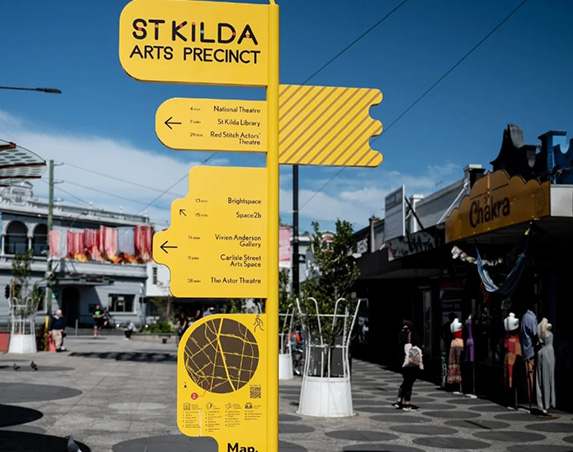
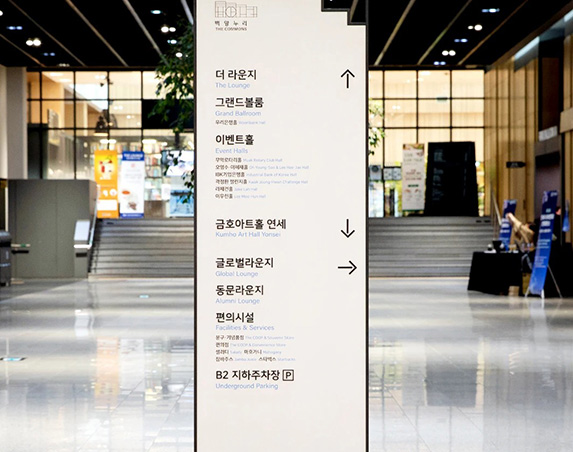
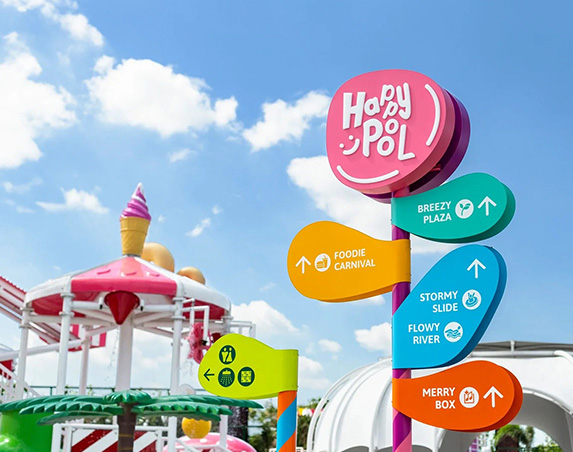
Core Distinction from Wayfinding Signage
- The essential difference between a Totem and standard wayfinding signage lies in the weight of "spiritual conveyance":
- Scale: Totems are typically ≥5 meters, while wayfinding signs are mostly 1-5 meters.
- Function: Totems focus on "culture/brand transmission," while wayfinding signs prioritize "path guidance."
- Design: Totems emphasize artistic expression and cultural integration, while wayfinding signs emphasize simplicity and information delivery efficiency.